
 May 26, 2026
  13 Min
  No Comment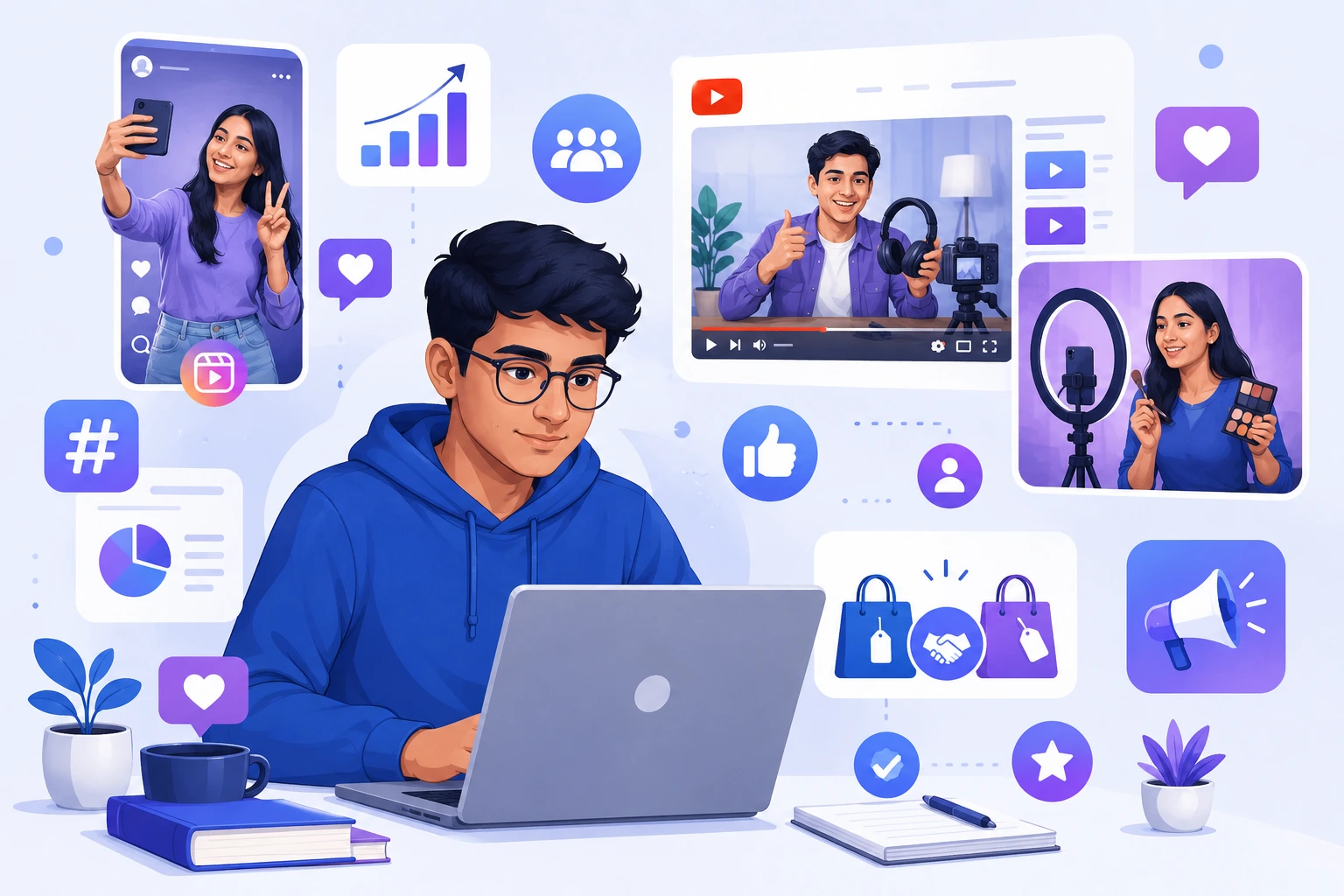
The way brands connect with their customers has changed completely over the past decade. Walk into any college campus in India today and you will find students watching product reviews on YouTube, following fitness creators on Instagram, and discovering new brands through the content they genuinely enjoy. This shift is not accidental. It is powered by influencer marketing, one of the fastest-growing strategies in modern digital marketing.
India now has over 800 million internet users, and the creator economy is thriving. From small-town YouTubers to metro-based Instagram personalities, Indian content creators are reshaping how brands communicate with audiences. For students interested in digital marketing, understanding influencer marketing is not just useful, it is essential. This manual outlines all the essential information in clear, practical language.
What is Influencer Marketing? A Simple Guide for Indian Students
What is Influencer Marketing?
Influencer marketing is a strategy where brands partner with individuals who have a dedicated following on social media platforms to promote their products or services. These individuals, called influencers or content creators, have built trust and credibility with their audience around a specific topic, whether that is beauty, fitness, food, technology, travel, or finance.
In straightforward terms, think of it this way. When your favorite food blogger on Instagram shares a recipe using a specific brand of cooking oil, or when a tech YouTuber reviews a new smartphone and includes a purchase link, that is influencer marketing in action. The brand is using the creator’s existing relationship with their audience to generate awareness, interest, and sometimes direct sales.
What makes this different from traditional advertising is authenticity. Audiences follow influencers because they like their personality, trust their opinions, and enjoy their content. When an influencer recommends something, it carries more weight than a television commercial from the same brand.
Influencer Marketing Example
Consider a brand like Mamaearth, one of India’s most successful D2C companies. A significant part of their early growth came from collaborating with beauty influencers and mom creators on Instagram and YouTube who genuinely tested their products and shared results with their followers. The audience trusted these creators, which translated into real sales for the brand.
Similarly, a tech brand launching a new budget smartphone might partner with YouTube creators who review budget phones specifically. Their audience is exactly the target customer, so the collaboration reaches the right people through a voice they already trust.
How Influencer Marketing Works
A successful influencer marketing campaign follows a clear path from strategy to results. Here is a step-by-step look at the process brands typically follow.
Step-by-Step Influencer Marketing Process
1. Define the target audience: Before approaching any creator, the brand identifies who they want to reach, based on age, interests, location, and buying habits.
2. Find the right influencers: Brands search for creators whose audience matches their target profile. They evaluate follower count, engagement rate, content quality, and niche alignment.
3. Develop the collaboration strategy: Both parties agree on deliverables. This might be an Instagram reel, a YouTube review, a blog post, or a combination. Timelines, compensation, and content guidelines are finalized.
4. Create and publish sponsored content: The influencer creates content that feels natural to their style while incorporating the brand message. Transparency regulations require sponsored posts to be labeled as such.
5. Track and measure performance: Brands monitor metrics like views, reach, engagement, website traffic, and conversions to evaluate whether the campaign delivered results.
Types of Influencers
Not every influencer is the same. Marketers classify them into four main categories based on audience size, and each type serves a different purpose in a marketing strategy.
Nano Influencers
Nano influencers typically have between 1,000 and 10,000 followers. Though their accounts might be modest, their engagement rates are frequently the highest among all categories. Their audience usually consists of people who genuinely know or relate to them, making recommendations feel personal and credible. For local businesses or hyperlocal campaigns, nano influencers are increasingly valuable.
Micro Influencers
Micro influencers have followings ranging from 10,000 to 100,000 people. They are highly popular among startups, regional brands, and small businesses in India because they offer a strong combination of engaged audiences and relatively affordable collaboration costs. A fitness micro influencer in Pune or a food blogger in Chennai can drive meaningful results for brands targeting those specific markets.
Macro Influencers
Macro influencers have audiences between 100,000 and one million followers. They are typically established content creators who have built careers around their platforms. Brands with larger budgets use macro influencers for wider reach, especially during major product launches or national campaigns.
Celebrity Influencers
Celebrity influencers include Bollywood actors, cricketers, and major internet personalities with millions of followers.Partnering with them ensures substantial exposure but demands considerable funding.In India, brands in categories like fashion, food delivery, and personal care frequently work with celebrity creators for high-impact awareness campaigns.
Popular Platforms for Influencer Marketing
Instagram Influencer Marketing
Instagram continues to be the leading platform for influencer marketing in India. Reels in particular have become a powerful format because short-form video drives high engagement and shares. Brands work with Instagram creators for product launches, unboxings, tutorials, lifestyle integrations, and sponsored stories. The visual nature of the platform makes it ideal for categories like fashion, beauty, food, and travel.
YouTube Influencer Marketing
YouTube is the platform of choice for detailed product reviews, how-to tutorials, and long-form storytelling. Indian audiences consume massive amounts of YouTube content in both English and regional languages. For brands selling products that benefit from demonstration, such as electronics, skincare routines, or cooking appliances, YouTube collaborations tend to deliver strong credibility and purchase intent.
Facebook Influencer Marketing
While younger audiences have moved to Instagram and YouTube, Facebook continues to serve as an important platform for community-driven influencer marketing. Regional creators, parenting communities, and local business networks in India use Facebook groups and pages effectively. For brands targeting older demographics or tier-two and tier-three city audiences, Facebook remains relevant.
LinkedIn Influencer Marketing
LinkedIn is the emerging frontier for influencer marketing in the professional and B2B space. Founders of startups, HR specialists, marketing professionals, and industry executives cultivate audiences on LinkedIn and sway buying choices for business tools, software, and professional development resources.decisions for business tools, software, and professional development products. For SaaS companies and ed-tech brands in India, LinkedIn creator partnerships are growing rapidly.
Benefits of Influencer Marketing
There are compelling reasons why brands of all sizes are investing in influencer marketing as a core part of their digital strategy.
⦁ Precise audience targeting: By choosing creators who serve a specific niche, brands reach exactly the type of customer they want, reducing wasted ad spend.
⦁ Stronger brand awareness: A single viral reel or YouTube video can introduce a brand to millions of potential customers in a matter of days.
⦁ Higher trust and credibility: Audiences trust creators they follow. A recommendation from a respected influencer carries far more weight than a display advertisement.
⦁ Cost-effective for small businesses: Working with nano or micro influencers is accessible even for brands with modest marketing budgets, especially compared to traditional media buys.
⦁ Faster path to virality: Well-placed influencer content can generate organic shares, reposts, and conversations that multiply the campaign’s reach beyond the initial post.
Influencer Marketing in India
India’s influencer marketing industry has grown remarkably over the past few years and shows no signs of slowing down. The rise of affordable smartphones, cheap mobile data, and regional language content has created millions of creators and hundreds of millions of engaged viewers across every state in the country.
The Indian creator economy now covers vernacular creators in Tamil, Telugu, Hindi, Bengali, Kannada, and many other languages. Brands that previously focused only on English-speaking audiences are now partnering with regional creators to penetrate tier-two and tier-three markets where purchasing power is rising fast.
In 2026, influencer marketing trends in India include a strong move toward performance-based collaborations, where creators are paid partly on results rather than just reach. AI-powered tools for finding and evaluating influencers are becoming standard. Short videos are prevalent, yet audio and live-streaming are also becoming more popular.For students entering the workforce, this industry represents one of the most dynamic and growing career spaces in Indian digital marketing.
Influencer Marketing vs Affiliate Marketing
Students often confuse influencer marketing with affiliate marketing. While both involve partnerships between brands and individuals who promote products, they work quite differently. The table beneath highlights the key differences.
- Feature Influencer Marketing Affiliate Marketing
- Primary Goal Build brand awareness and trust Drive direct sales and conversions
- Key Players Social media creators and influencers Publishers using referral links
- Success Metric Reach, engagement, brand recall Clicks, conversions, commissions
- Payment Model Fixed fee or barter per campaign Commission on each confirmed sale
- Best For New brands, product launches E-commerce, affiliate programs
In practice, many influencer campaigns now include an affiliate component, where the creator also receives a commission on sales driven through their unique referral link. This hybrid approach is becoming increasingly common in Indian e-commerce and ed-tech collaborations.
How Students Can Start Learning Influencer Marketing
Learn Social Media Marketing Basics
Before anything else, develop a solid understanding of how major social media platforms work from a marketing perspective. Study how algorithms distribute content, what types of posts generate engagement, how hashtag strategies work, and what metrics actually matter. Free resources from Meta Blueprint, Google Digital Garage, and HubSpot Academy are excellent starting points.
Build Personal Branding
The most effective way to understand influencer marketing is to practice it yourself. Start a content account on Instagram or YouTube around a topic you genuinely know and care about. Whether it is student budgeting tips, college life in India, book recommendations, or tech gadget reviews for students, building even a small personal brand teaches you audience psychology, content consistency, and platform behavior that no textbook can replicate.
Take Online Courses
Several platforms offer strong influencer marketing and social media marketing courses, including Coursera, Udemy, and Indian platforms like Internshala and Learnvern. Look for courses that include practical assignments, case studies from Indian brands, and certificates you can add to your resume or LinkedIn profile.
Practice with Small Campaigns
Reach out to local businesses in your area, a restaurant, a tutoring service, a clothing boutique, and offer to create a small influencer collaboration campaign for them. Even unpaid work builds a real portfolio. Document the results honestly, what worked, what did not, and what you would do differently. A portfolio with actual campaign data is far more impressive to employers than a list of courses taken.
Career Opportunities in Influencer Marketing
As brands continue investing in creator-driven marketing, the demand for professionals who understand this space is growing. Here are some of the roles available in India today.
⦁ Influencer Marketing Manager: Develops and implements creator campaigns for brands or agencies, oversees influencer relationships, and tracks performance metrics.reports on performance.
⦁ Social Media Strategist: Develops the content and platform strategy that informs which creators a brand should work with and why.
⦁ Brand Collaboration Executive: Works on the business development side, identifying creators to partner with and negotiating collaboration terms.
⦁ Content Creator Manager: Manages a roster of influencers under an agency or MCN (Multi-Channel Network), helping them grow and connecting them with brand deals.
⦁ Freelance Influencer Marketer: Works independently across multiple clients, managing campaigns, finding influencers, and delivering results on a project basis.
Future of Influencer Marketing in India
The road ahead for influencer marketing in India is rich with opportunity. Several clear trends are shaping what the industry will look like over the next three to five years.
Artificial intelligence is starting to transform how brands identify influencers, assess audience credibility, forecast campaign results, and tailor content on a large scale. performance, and personalize content at scale. Students who understand both the human side of creator relationships and the data tools supporting those decisions will have a clear advantage.
Short-form video will remain dominant, but the competition among platforms to host creator content is intensifying. Regional language creators are expected to form a larger share of successful influencer campaigns as brands chase the next hundred million Indian consumers in smaller cities and towns.
Regulations around sponsored content are also maturing. The Advertising Standards Council of India has issued guidelines requiring disclosure of paid partnerships, and enforcement is strengthening. Understanding compliance will become an important part of any influencer marketing professional’s skill set.
Conclusion
Influencer marketing has moved well beyond a trend. It is now a core pillar of how modern brands in India build awareness, earn trust, and drive growth. For students entering the digital marketing world, this is one of the most exciting and accessible spaces to learn, experiment, and build a career.
The barriers to entry are genuinely low. A substantial budget or extensive experience isn’t necessary to start.You need curiosity, a willingness to create, and a desire to understand how audiences think and behave online. Start learning the basics, build something of your own, run small experiments, and stay close to the industry as it evolves. The creators and marketers who start early will be the ones setting the agenda for the next chapter of India’s digital economy.
Frequently Asked Questions
1. What is influencer marketing in simple words?
Influencer marketing is a form of digital marketing where brands collaborate with social media creators and content influencers to promote their products or services to an engaged audience. Instead of direct advertising, the brand message travels through a trusted voice the audience already follows.
2. How does influencer marketing work?
Brands identify influencers whose audience matches their target customers, agree on a collaboration structure, and the influencer creates sponsored content that promotes the product. The brand then tracks performance through metrics like reach, engagement, website visits, and sales.
3. Which platform is ideal for influencer marketing?
In India, Instagram and YouTube are presently the leading platforms for influencer marketing. Instagram is most effective for visual products and lifestyle content, whereas YouTube excels in in-depth reviews, tutorials, and extended narratives
4. Can students learn influencer marketing?
Absolutely. Influencer marketing is one of the most learnable areas of digital marketing for students. You can start with free online courses, build your own social media presence, and gain real experience by running small campaigns for local businesses. Practical experience matters more here than formal degrees.
5. What is the difference between influencer marketing and affiliate marketing?
Influencer marketing is primarily focused on building brand awareness and audience trust through creator content. Affiliate marketing is more transactional, where the creator earns a commission on sales made through their unique referral link. Many modern campaigns combine both approaches for maximum impact.
6. Is influencer marketing a good career in India?
Yes, it is one of the fastest-growing career paths in Indian digital marketing. Opportunities exist across brands, agencies, creator management firms, and freelance consulting. Students who build skills in content strategy, creator relations, analytics, and campaign management will find strong demand for their expertise as India’s creator economy continues to expand.