
 June 4, 2026
  14 Min
  No Comment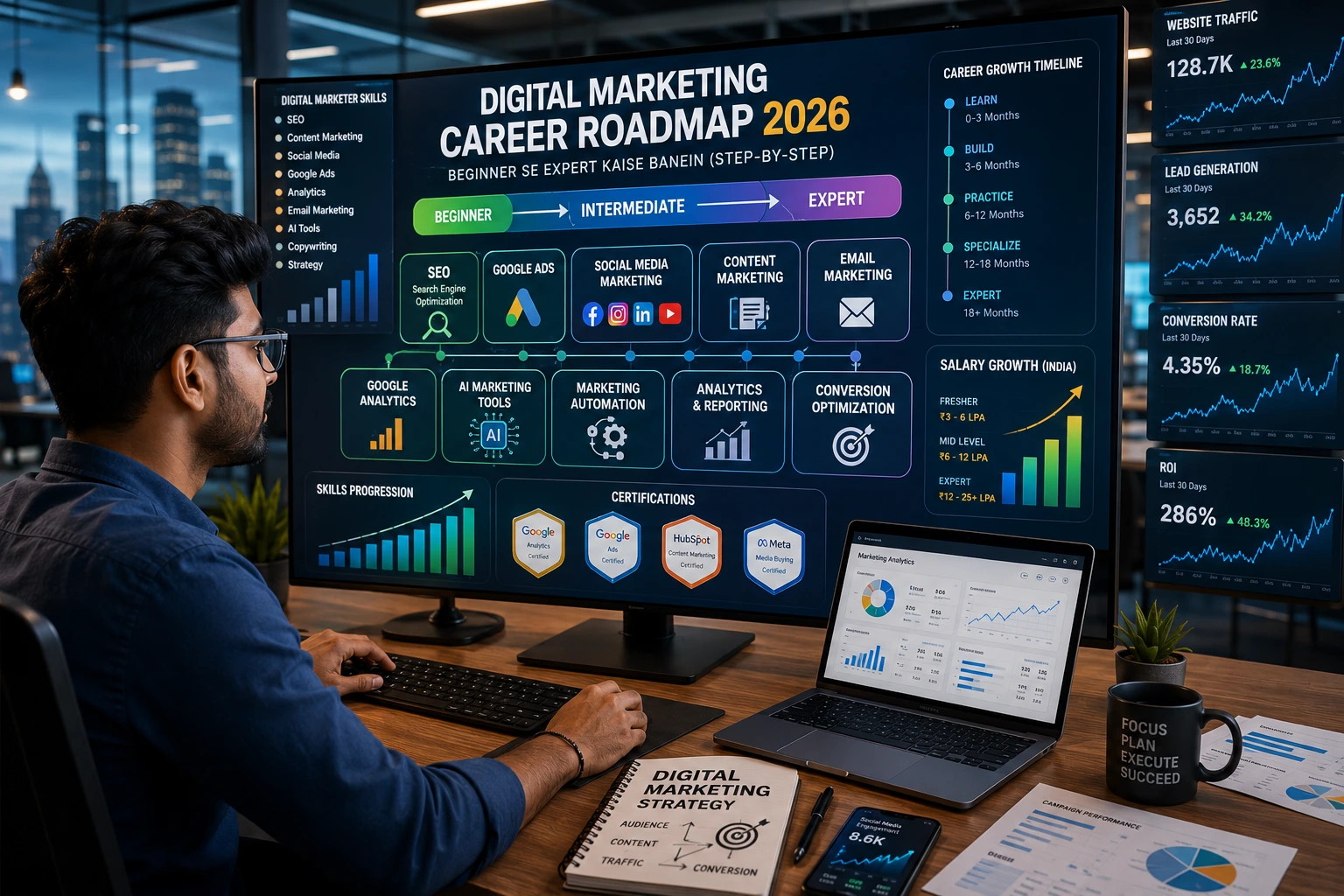
The digital economy in India is expanding at a remarkable pace. With over 900 million internet users projected by 2026 and businesses of every size racing to establish a meaningful online presence, the demand for skilled digital marketers has never been higher. Whether you are a fresh graduate exploring career options, a working professional planning a switch, or an entrepreneur who wants to scale online, building a career in digital marketing is one of the smartest decisions you can make right now.
This comprehensive digital marketing career roadmap walks you through every stage of your learning journey, from understanding what the field actually involves to landing your first job, earning industry certifications, and growing into an expert-level professional.
What Is Digital Marketing and Why Does It Matter?
Digital marketing is the practice of promoting products, services, and brands through internet-connected channels and platforms. Unlike traditional marketing that relies on print, television, or radio, digital marketing uses search engines, social media platforms, email, websites, and mobile apps to connect with a target audience at the exact moment they are looking for relevant information.
Businesses today depend on digital channels for customer acquisition, lead generation, brand awareness, and revenue growth. Even local retailers in tier-2 and tier-3 Indian cities are investing in Google Ads, Instagram marketing, and WhatsApp commerce. This shift has created a massive talent gap. Companies across every sector, from e-commerce and fintech to healthcare and education, are actively hiring digital marketing professionals.
Digital Marketing Career Scope in 2026
Industry Demand and Growth Trends
The Indian digital advertising market is projected to surpass $21 billion by 2028, driven by increasing smartphone penetration, the rise of short-form video content, and the widespread adoption of AI-powered marketing tools. In 2026, the most in-demand roles include SEO specialists, performance marketing managers, content strategists, social media managers, and marketing automation experts.
Remote work opportunities have also expanded significantly in this field. Many agencies, SaaS companies, and global brands now hire digital marketers on a remote or hybrid basis, opening up opportunities beyond metro cities.
Digital Marketing Salary in India (2026)
Compensation in digital marketing varies based on specialization, years of experience, and location. Below is a realistic overview of current earning potential:
Experience Level | Annual Salary (INR) | Role Examples |
Fresher (0-1 yr) | 3 – 6 LPA | SEO Intern, Jr. Content Writer |
Mid-Level (2-4 yrs) | 7 – 14 LPA | SEO Analyst, Social Media Mgr |
Expert (5+ yrs) | 15 – 30+ LPA | Performance Mktg Head, CMO |
Freelancer | Varies: 50K-5L/mo | PPC Expert, SEO Consultant |
Freelancers with expertise in Google Ads, SEO, or performance marketing can earn significantly more, especially when working with international clients billed in USD or GBP.
Digital Marketing Career Roadmap 2026: Step-by-Step Learning Path
The following step-by-step digital marketing learning roadmap is structured to build your skills progressively, starting from foundational knowledge and advancing toward specialized, job-ready expertise.
Step 1: Learn Digital Marketing Fundamentals
Before diving into tools and platforms, you need a clear mental model of how marketing works. Start with the basics:
- Understand the 4Ps of marketing: Product, Price, Place, and Promotion
- Study the customer journey: Awareness, Consideration, Decision, and Loyalty
- Learn the structure of the digital marketing funnel and how leads are nurtured through each stage
- Grasp core concepts like brand positioning, target audience profiling, and value proposition
Recommended free resources: Google Digital Garage, HubSpot Academy, and Coursera introductory courses.
Step 2: Master Search Engine Optimization (SEO)
SEO is the backbone of organic digital marketing. A solid grasp of SEO principles makes you valuable to almost any digital team and directly impacts a website’s ability to attract free, qualified traffic.
- Keyword research: Use tools like Google Keyword Planner, Ahrefs, and SEMrush to find high-intent keywords
- On-page SEO: Title tags, meta descriptions, header hierarchy, internal linking, and content optimization
- Off-page SEO: Link building strategies, digital PR, and building domain authority
- Technical SEO: Site speed, mobile-friendliness, crawlability, Core Web Vitals, and schema markup
- Google Search Console: Learn to monitor indexing, identify errors, and track search performance
Step 3: Learn Content Marketing
Content is what drives SEO rankings, social engagement, and brand authority. Strong content marketers can shape how audiences perceive a brand and guide them through the buying journey.
- Learn to write SEO-optimized blog posts, landing pages, and product descriptions
- Develop a content calendar and understand how to plan content around search intent
- Use AI tools like ChatGPT for ideation, structuring, and first drafts, but always add original insight and E-E-A-T depth
- Study copywriting principles: headlines, calls to action, persuasion frameworks like AIDA and PAS
Step 4: Learn Social Media Marketing
With billions of active users across platforms, social media marketing is one of the most dynamic and visible parts of digital marketing.
- Facebook and Instagram Marketing: Understand organic content strategy, Reels, Stories, and paid promotion
- LinkedIn Marketing: Ideal for B2B brands; learn company page management, thought leadership content, and lead generation forms
- YouTube Marketing: Video SEO, channel growth strategy, and YouTube Ads
- Platform algorithm basics: How organic reach is determined and how to maximize engagement
Step 5: Learn Google Ads and PPC Advertising
Pay-per-click advertising is one of the fastest ways to generate results for businesses. PPC skills are highly paid and constantly in demand.
- Search Ads: Keyword targeting, ad copy, Quality Score, and bid strategies
- Display Ads: Audience targeting, banner design best practices, and remarketing campaigns
- YouTube Ads: TrueView formats, audience segmentation, and video ad creative
- Conversion tracking: Google Tag Manager, goal setup in GA4, and measuring ROAS
Step 6: Learn Email Marketing
Despite being one of the oldest digital channels, email consistently delivers the highest ROI of any marketing medium. Learning email marketing gives you a powerful tool for nurturing leads and retaining customers.
- Build and segment email lists for targeted messaging
- Design effective email sequences for lead nurturing and onboarding
- Set up automation workflows using tools like Mailchimp, HubSpot, or Klaviyo
- Write compelling subject lines and test open rates, click-through rates, and conversions
Step 7: Learn Analytics and Reporting
Data fluency separates good marketers from great ones. Every campaign you run should be measured, analyzed, and improved.
- Google Analytics 4: User behavior, traffic sources, events, conversions, and audience reports
- Set up and track key performance indicators (KPIs) for each channel
- Build dashboards in Looker Studio to visualize campaign performance for clients or stakeholders
- Develop the habit of data-driven decision making: test hypotheses, analyze results, and optimize
Step 8: Learn AI Tools for Digital Marketing
Artificial intelligence is no longer optional in digital marketing. Professionals who can combine human creativity with AI efficiency have a clear competitive advantage.
- ChatGPT and Claude: Content ideation, email drafts, ad copy, and audience research
- Jasper, Copy.ai, and Writesonic: AI-assisted content at scale
- AI-powered SEO tools: Surfer SEO, Clearscope, and MarketMuse for content optimization
- Marketing automation: HubSpot, ActiveCampaign, and Zapier workflows to save time and increase personalization
Essential Digital Marketing Skills Required in 2026
Technical Skills
- Search Engine Optimization (on-page, off-page, technical)
- Google Ads and Meta Ads campaign management
- Google Analytics 4 and Looker Studio
- WordPress basics: publishing, plugins, and page speed optimization
- Marketing automation platforms and CRM tools
Creative Skills
- SEO content writing and long-form blog creation
- Persuasive copywriting for ads, landing pages, and emails
- Short-form video scripting and editing for Reels and YouTube Shorts
- Canva for social media graphics and basic visual design
Soft Skills
- Clear written and verbal communication for client reporting and collaboration
- Analytical thinking and problem-solving under campaign pressure
- Time management for handling multiple projects or clients simultaneously
- Adaptability: The digital marketing landscape changes rapidly; staying curious is non-negotiable
Best Digital Marketing Certifications to Earn in 2026
Certifications serve as credibility signals to employers and clients, especially when you are building your early-career portfolio. Focus on recognized certifications from trusted platforms.
Google Certifications
- Google Analytics Certification: Validates your ability to use GA4 for traffic and conversion analysis
- Google Ads Certifications: Available for Search, Display, YouTube, and Shopping campaigns
HubSpot Certifications
- Content Marketing Certification: Covers content strategy, storytelling, and editorial planning
- Email Marketing Certification: Segmentation, automation, and campaign optimization
- Inbound Marketing Certification: Full-funnel strategy aligned with modern buyer behavior
Meta Certifications
- Meta Certified Digital Marketing Associate: Foundational knowledge of Meta advertising
- Meta Certified Media Planning Professional: Advanced audience strategy and campaign planning
Essential Tools Every Digital Marketer Should Learn
SEO Tools
- Google Search Console: Free, essential for monitoring organic performance and fixing technical issues
- Ahrefs: Backlink analysis, keyword research, site auditing, and competitor research
- SEMrush: All-in-one suite for SEO, PPC keyword data, social monitoring, and content marketing
Content and Creative Tools
- ChatGPT and Claude: AI assistants for brainstorming, drafting, and refining content
- Grammarly: Grammar, clarity, and tone checking for all written content
- Canva: Design social media graphics, presentations, infographics, and email banners
Analytics and Reporting Tools
- Google Analytics 4: User-level behavior tracking and conversion reporting
- Looker Studio: Free data visualization to build client-ready marketing dashboards
Marketing Automation Tools
- HubSpot: CRM, email automation, landing pages, and lead management in one platform
- Mailchimp: Beginner-friendly email marketing and basic automation
- Zapier: Connect apps and automate workflows without writing code
How to Build a Strong Digital Marketing Portfolio
Certificates alone are not enough to land a good job. Hiring managers and clients want proof of real-world skills. Building a portfolio while you learn is one of the most effective steps in your digital marketing career path.
- Create your own blog or website: Pick a niche, apply SEO techniques, and track your organic traffic growth over 3 to 6 months
- Run practice Google Ads campaigns: Use a small budget (even Rs. 500 to Rs. 1000) to learn campaign setup and optimization
- Build social media case studies: Manage a page for a friend’s business or a local nonprofit and document the results
- Create an SEO project: Target low-competition keywords, write content, build backlinks, and document your ranking improvements
- Showcase certifications and results: Add all credentials, screenshots of results, and project summaries to a portfolio website or PDF deck
How to Get Your First Digital Marketing Job
Build Practical Experience Before Applying
Even without a formal job, you can build hands-on experience. Offer to run social media for a small local business, start your own blog project, or volunteer for a nonprofit. These real-world projects carry more weight than any certificate alone.
Apply for Internships First
Digital marketing internships are widely available at agencies, startups, and e-commerce companies. An internship gives you live campaign experience, industry mentorship, and often leads directly to a full-time offer. Apply to positions on LinkedIn, Internshala, and Naukri.
Optimize Your LinkedIn Profile
LinkedIn is the primary platform recruiters use to find marketing talent. List every relevant skill, add your certifications, write a compelling headline and about section, and share original content to demonstrate expertise. Connect with digital marketing professionals and hiring managers in your target companies.
Prepare for Interviews
Common interview topics include SEO fundamentals, Google Ads campaign structure, analytics interpretation, content marketing strategy, and social media KPIs. Practice explaining concepts clearly and be prepared to walk through your portfolio projects. Research the company before each interview and come with relevant questions.
Freelancing vs Full-Time Career in Digital Marketing
Benefits of Freelancing
- Work from anywhere with flexible hours and no commute
- Earn significantly more per hour than a salaried role once established
- Build a diverse portfolio across industries and client types
- Scale income by taking on multiple clients or productizing your services
Benefits of a Full-Time Job
- Stable monthly income with health benefits and annual increments
- Structured learning environment with team collaboration and mentorship
- Access to larger campaign budgets and enterprise tools
- Career progression opportunities: senior executive, manager, director
Which Path Is Better for Beginners?
If you are starting out in 2026, a full-time role or structured internship is recommended for the first 12 to 18 months. Working within a team accelerates learning, exposes you to real budgets and clients, and helps you understand how marketing fits into broader business strategy. Freelancing becomes far more rewarding once you have a proven track record, testimonials, and a personal brand.
Common Mistakes Beginners Make in Digital Marketing
Learning without implementing: Reading about SEO or Google Ads without actually running campaigns leaves you unprepared for real challenges. Practice on every project you can, however small.
Ignoring SEO fundamentals: Many beginners jump straight to paid ads and social media while underestimating the long-term value of organic search. SEO skills compound over time and are foundational to a strong marketing career.
Skipping portfolio development: Certificates impress HR filters, but your portfolio is what convinces hiring managers. Treat every personal project as a portfolio piece from day one.
Avoiding analytics: Numbers tell you what is working and what needs fixing. Marketers who cannot read and interpret data are always at a disadvantage. Get comfortable with Google Analytics 4 early.
Trying to learn everything at once: Digital marketing has many specializations. Pick one primary area (usually SEO or content marketing) to master first, then expand your skillset systematically.
12-Month Digital Marketing Learning Roadmap
Use this structured timeline to go from beginner to job-ready in one year:
Phase | Timeline | Focus Areas | Outcome |
Phase 1 | Months 1-3 | Fundamentals + SEO | Basic job-readiness |
Phase 2 | Months 4-6 | Content + Social Media | First internship |
Phase 3 | Months 7-9 | Google Ads + Analytics | Paid campaigns |
Phase 4 | Months 10-12 | Portfolio + Certs + Jobs | Full-time role |
Months 1 to 3: Fundamentals and SEO
Complete a digital marketing fundamentals course, then dedicate the bulk of your time to learning SEO. Set up your own practice website on WordPress, install Google Search Console, and start publishing keyword-optimized content. Begin with Google Digital Garage and HubSpot Academy.
Months 4 to 6: Content Marketing and Social Media
Deepen your content writing and strategy skills. Start managing at least one social media account, whether for yourself or a small business. Focus on understanding platform algorithms, engagement metrics, and how to build a content calendar aligned with business goals.
Months 7 to 9: Google Ads and Analytics
Launch your first Google Ads campaign with a small test budget. Study GA4 thoroughly and connect it to your website and ad accounts. Build your first Looker Studio dashboard. Aim to pass the Google Ads and Google Analytics certifications during this phase.
Months 10 to 12: Portfolio, Certifications, and Job Preparation
Polish your portfolio, write case studies for your projects, and earn remaining certifications. Optimize your LinkedIn profile, apply for jobs and internships, and begin networking within digital marketing communities. Target your first interview within this final quarter.
Future of Digital Marketing Careers Beyond 2026
The digital marketing landscape will continue to evolve rapidly. Here are the trends shaping careers beyond 2026:
- AI-augmented marketing: Generative AI will handle increasing amounts of content production and campaign optimization, but human strategy, creativity, and judgment will remain irreplaceable
- Performance marketing growth: Data-driven advertising roles that focus on measurable ROI will become even more central to business operations
- Creator economy opportunities: Brands will deepen partnerships with niche content creators and influencers, creating new consulting and strategy roles
- Privacy-first marketing: With increasing data privacy regulation, first-party data strategy and cookieless tracking will become critical competencies
- Emerging roles: Prompt engineers for marketing AI tools, marketing operations specialists, and conversion rate optimization (CRO) experts are among the fastest-growing positions
Conclusion
Building a successful digital marketing career in 2026 requires more than completing a few online courses. It demands consistent practice, a genuine curiosity for how digital channels work, the discipline to build a portfolio that proves your skills, and the adaptability to keep learning as the industry evolves.
Follow the step-by-step digital marketing career roadmap outlined above. Start with the fundamentals, go deep on one or two core skills like SEO and content marketing, and expand your expertise progressively. Build real projects, earn respected certifications, and document your results.
The best time to begin your digital marketing learning path was yesterday. The second best time is today. Start with one module, finish one certification, and build one project this week. Momentum is everything in this field.
Frequently Asked Questions
How can I start a digital marketing career in 2026 with no experience?
Begin with free resources like Google Digital Garage and HubSpot Academy to learn the fundamentals. Then focus on one specialization such as SEO or content marketing. Build a practice project (your own blog or a social media page for a small business), document your results, and apply for internships. Practical experience combined with a portfolio is more valuable than any single certification.
What skills are most in demand for digital marketers in 2026?
The highest-demand skills include SEO, performance marketing (Google Ads and Meta Ads), marketing analytics with GA4, email automation, content strategy, and AI tool integration. Professionals who combine creative skills with data literacy are especially sought after by employers.
Is digital marketing a good career choice in India?
Digital marketing remains one of the fastest-growing and most accessible career fields in India. The low barrier to entry, the availability of free learning resources, the variety of career paths, and the strong demand across industries make it an excellent choice for both freshers and career changers in 2026.
How long does it take to become a job-ready digital marketer?
With focused effort and consistent daily practice, most learners can become job-ready within 6 to 12 months. Reaching expert-level proficiency typically takes 2 to 3 years of hands-on experience across multiple campaigns, clients, and channels.
What is the average salary of a digital marketer in India in 2026?
Entry-level digital marketing professionals typically earn between 3 and 6 LPA. Mid-level specialists with 2 to 4 years of experience earn 7 to 14 LPA. Senior and expert-level marketers with strong performance marketing or leadership experience earn 15 to 30+ LPA. Freelancers with proven expertise can earn significantly more.
Which digital marketing certification is most valuable in 2026?
The Google Ads Certification, Google Analytics Certification, HubSpot Content Marketing Certification, and the Meta Digital Marketing Associate Certification are widely recognized and respected by employers. Prioritize certifications that align with your chosen specialization.